
If you’re here, you’re probably dealing with a plant that seemed harmless at first… and now it’s spreading way faster than you expected. A lot of fast growing plants are sold for good reasons like quick coverage, privacy, or nice flowers. The problem is, some of them don’t know when to stop.
These fast growing plants can take over your yard by spreading through roots, vines, or seeds, often crowding out everything else in the process. Some are invasive, others are just extremely aggressive growers. Either way, they can quickly become more work than they’re worth if you’re not careful.
Article highlights
- Some fast growing plants can spread aggressively through roots, vines, or seeds
- Many popular landscaping plants can quickly get out of control
- Once established, these plants can be difficult to remove completely
1. Kudzu

- Scientific name: Pueraria montana var. lobata
- Native or not: Non-native (invasive)
- USDA zones: 6–10
- Growth habit: Fast-growing climbing vine
Kudzu is often called “the vine that ate the South,” and that reputation is well earned. It was introduced for erosion control, but quickly became one of the most aggressive plants in the United States. Under the right conditions, it can grow up to a foot per day, covering anything in its path.
This vine climbs over trees, fences, and structures, forming thick blankets that block sunlight. Once it covers an area, it can kill off existing plants simply by depriving them of light. Its root system is also extensive, making it very hard to fully remove.
There are some upsides, like erosion control and use as livestock forage, but for most homeowners, kudzu is a major problem. Once it gets established, it takes consistent cutting and long-term effort to bring it under control. I’ve seen kudzu totally envelope a full acre of land or more. It doesn’t play.
2. Japanese knotweed
- Scientific name: Reynoutria japonica
- Native or not: Non-native (invasive)
- USDA zones: 4–8
- Growth habit: Herbaceous perennial with spreading rhizomes
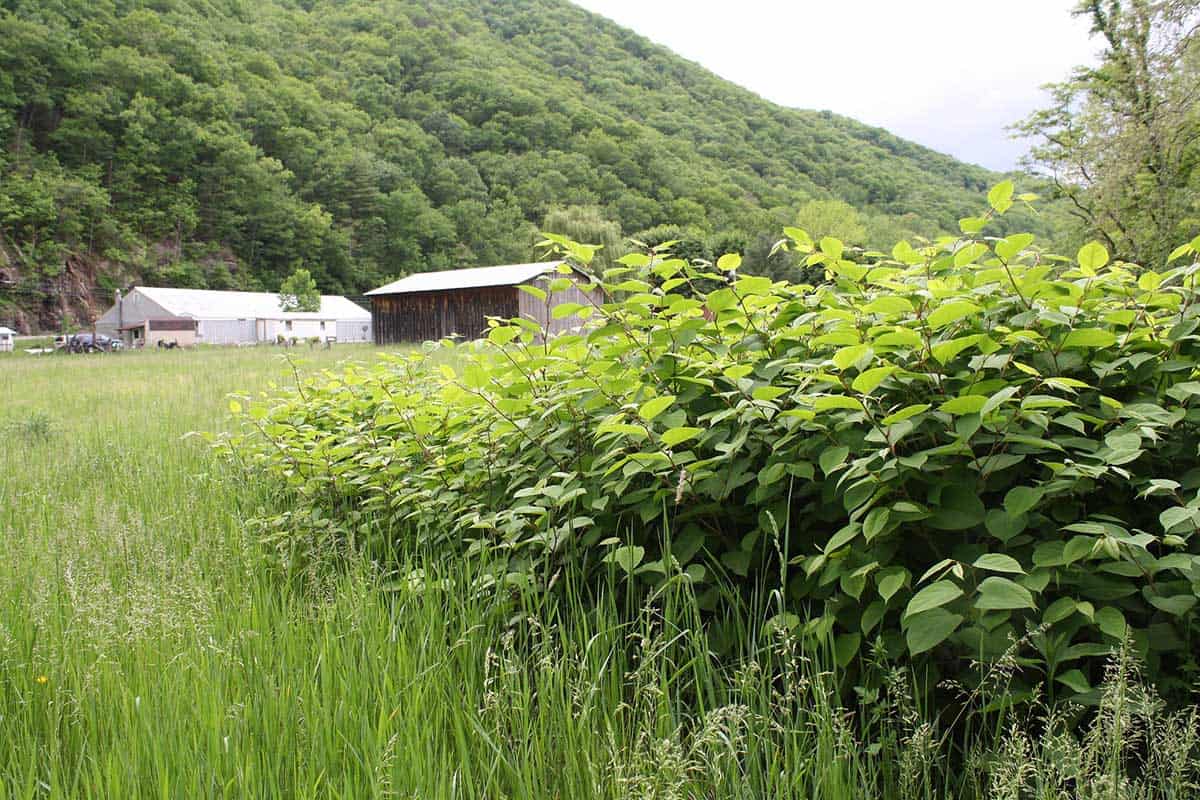
Japanese knotweed is one of the toughest plants to get rid of once it takes hold. It grows in dense clusters with bamboo-like stems and can quickly dominate an area. Even small root fragments left behind in the soil can regrow into new plants.
Its underground rhizome system spreads aggressively, often popping up in new spots several feet away from the original plant. It’s also strong enough to push through cracks in concrete, driveways, and foundations, which makes it especially frustrating for homeowners.
While it can provide quick coverage and some privacy, the downsides are significant. Controlling knotweed usually requires repeated cutting and careful management over multiple seasons, and in some cases, professional removal.
3. Bamboo (running types)
- Scientific name: Phyllostachys spp.
- Native or not: Non-native (most common types)
- USDA zones: 5–10
- Growth habit: Spreading grass with underground rhizomes
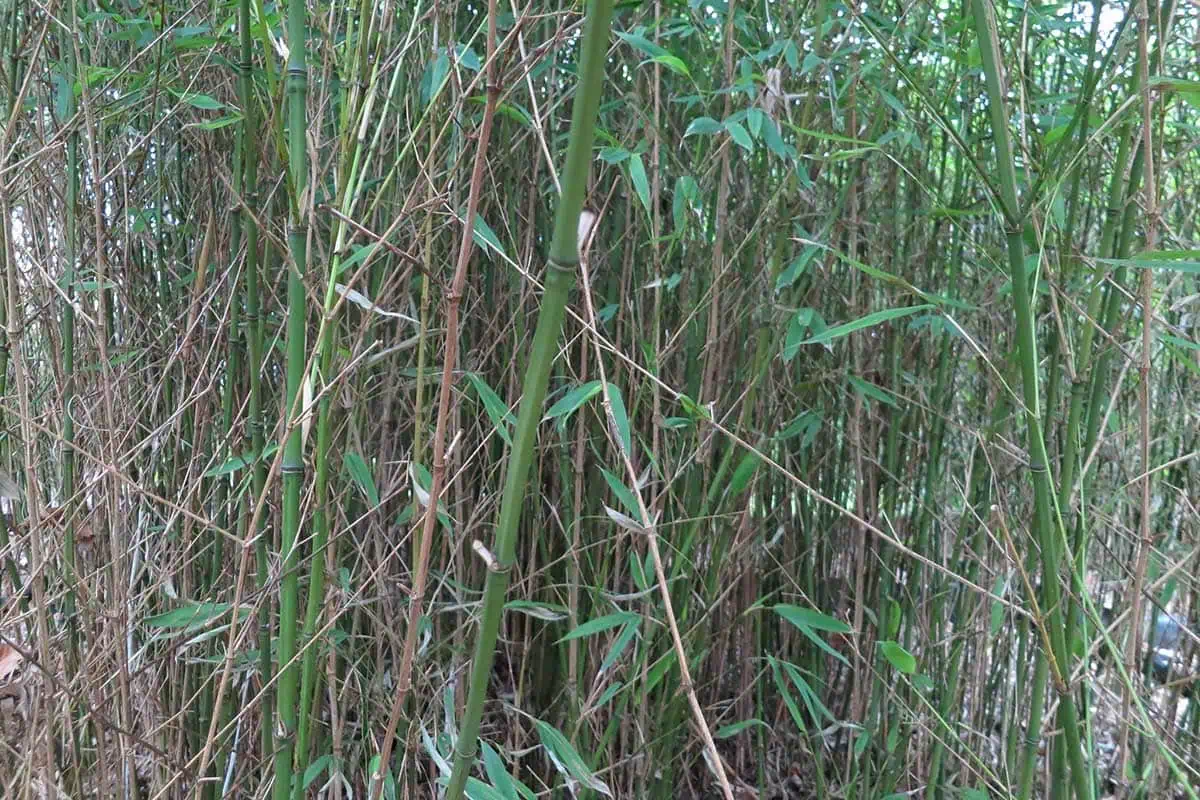
Running bamboo is one of the fastest spreading plants you can introduce into a yard. It grows through underground rhizomes that can travel several feet before sending up new shoots, often appearing in completely unexpected places.
At first, bamboo can look like a great option for privacy or screening. It grows quickly and creates a dense barrier. The problem is that it rarely stays where you plant it. Without proper containment, it can spread into lawns, gardens, and even neighboring properties.
There are clumping varieties that behave much better, but running bamboo is known for getting out of control. Once established, removing it often involves digging up extensive root systems or installing barriers to stop further spread.
4. Tree of heaven
- Scientific name: Ailanthus altissima
- Native or not: Non-native (invasive)
- USDA zones: 4–8
- Growth habit: Fast-growing tree with root suckers
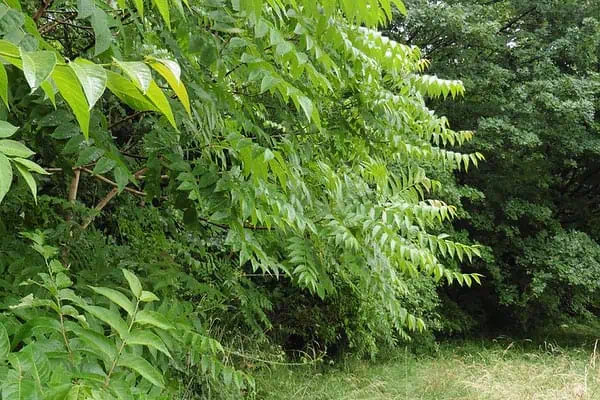
Tree of heaven grows quickly and can appear almost anywhere, from backyards to cracks in pavement. It spreads through seeds and aggressive root suckers, often forming clusters of trees in a short amount of time.
One of the biggest issues is how easily it regenerates. Cutting it down rarely solves the problem, as the roots will send up multiple new shoots. It can quickly turn into a repeating cycle of removal and regrowth.
It does provide fast shade and can tolerate poor soil conditions, but those same traits make it hard to control. Many homeowners find that once it shows up, it keeps coming back unless dealt with thoroughly.
5. Wisteria

- Scientific name: Wisteria sinensis / Wisteria floribunda
- Native or not: Non-native (common ornamental types)
- USDA zones: 5–9
- Growth habit: Woody climbing vine
Wisteria is known for its beautiful hanging flowers, but it’s also one of the most aggressive climbing vines you can plant. It grows quickly and can wrap tightly around trees, fences, and structures.
As it thickens, the vine can become heavy enough to damage or even collapse supports. When it climbs trees, it can restrict growth and eventually kill branches by cutting off light and airflow.
While it’s often planted for ornamental reasons, wisteria needs regular pruning to keep it under control. Without it, the vine can spread quickly and become difficult to manage.
6. Privet

- Scientific name: Ligustrum
- Native or not: Non-native (many invasive species)
- USDA zones: 5–10
- Growth habit: Dense shrub
Privet is commonly used for hedges, but it can easily spread beyond where it’s planted. Birds eat the berries and spread the seeds, leading to new plants popping up in unwanted areas.
Over time, privet can form dense thickets that crowd out other plants. It grows quickly and responds well to pruning, which is why it’s popular for landscaping, but that same vigor makes it hard to fully remove.
It does provide privacy and screening, but if left unmanaged, it can take over large sections of a yard or nearby natural areas. There was one very large privet bush that had somehow merged with a large oak tree, it was literally growing inside the oak tree cause the oak tree to create a massive burl.
7. Honeysuckle
- Scientific name: Lonicera spp.
- Native or not: Mixed (many invasive varieties)
- USDA zones: 4–9
- Growth habit: Shrub or vine
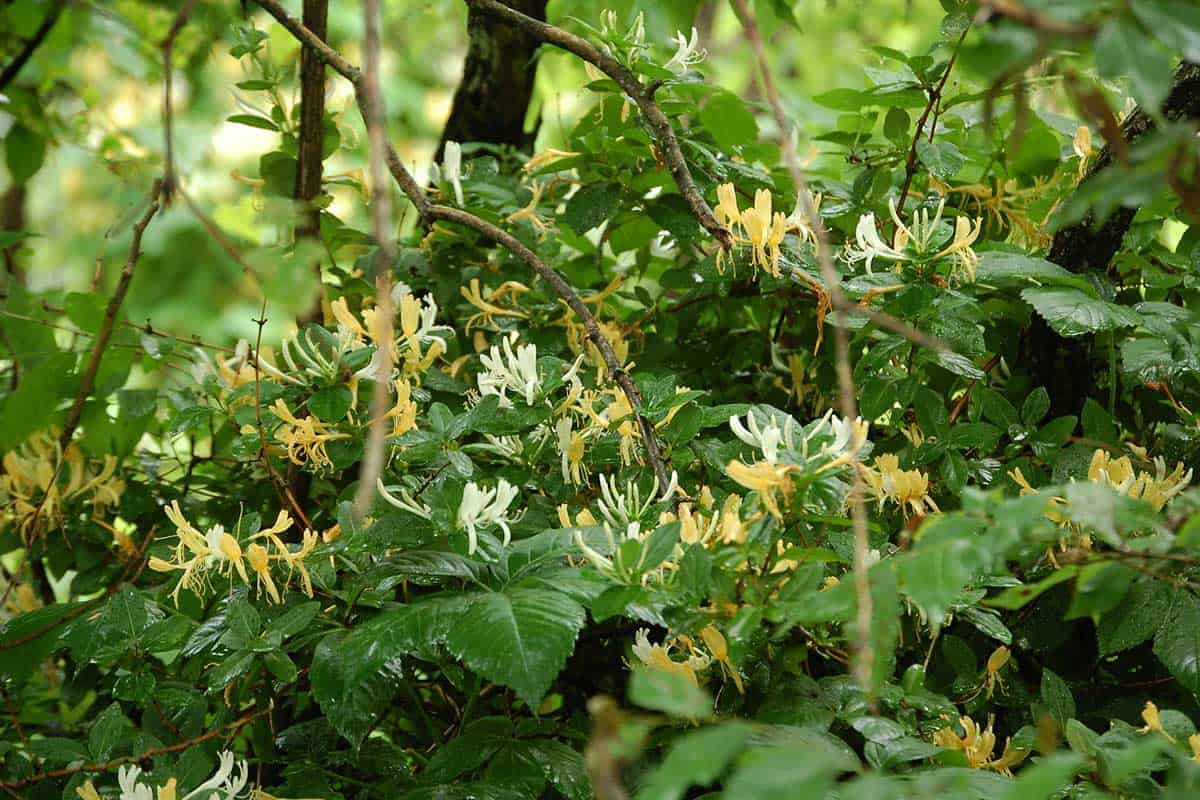
Honeysuckle is another plant that’s often introduced for its fragrant flowers and quick growth. Some varieties are well-behaved, but others spread aggressively and can quickly dominate an area.
It can grow as a vine or shrub, depending on the type, and spreads through seeds and vegetative growth. Once established, it can crowd out native plants and form dense growth that’s hard to penetrate.
While it attracts pollinators and wildlife, it can become a problem if not maintained. Regular pruning and monitoring are key to keeping it from spreading too far. We have this one all over the hedges and wooded edges along our property lines.
8. English ivy

- Scientific name: Hedera helix
- Native or not: Non-native (invasive)
- USDA zones: 4–9
- Growth habit: Climbing vine and ground cover
English ivy is often used as a ground cover or decorative climbing plant, but it can quickly get out of control. It spreads along the ground and climbs vertical surfaces with ease.
When it climbs trees, it can block sunlight and add weight that stresses branches. Over time, this can weaken or even kill the tree. On structures, it can work its way into cracks and cause damage.
It does provide dense coverage and can look attractive, but once it spreads, it’s difficult to remove completely. Even small pieces left behind can regrow. We have this one in out yard, especially on the more mature trees in the back lot.
9. Sweet autumn clematis
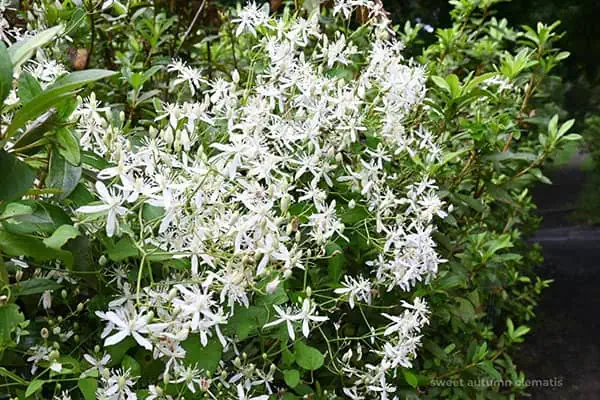
- Scientific name: Clematis terniflora
- Native or not: Non-native (invasive)
- USDA zones: 5–9
- Growth habit: Fast-growing flowering vine
Sweet autumn clematis is often planted for its fragrant white flowers, but it spreads aggressively through seeds. Once it establishes, it can quickly cover fences, shrubs, and other plants.
It grows fast and can form thick layers of growth that block light from anything underneath. In some areas, it escapes cultivation and spreads into natural habitats.
While it can be beautiful when in bloom, it requires regular control to prevent it from spreading too far. Without that, it can easily take over parts of a yard. I have it growing throughout my yard, especially in hedges and bushes. It grows and spreads quickly.
10. Trumpet vine
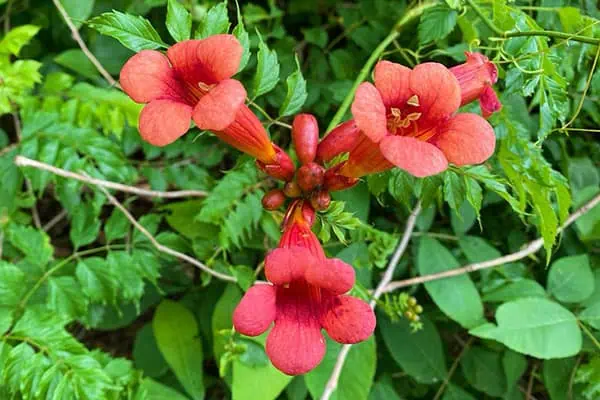
- Scientific name: Campsis radicans
- Native or not: Native
- USDA zones: 4–9
- Growth habit: Climbing vine with root spread
Trumpet vine is a favorite for attracting hummingbirds, but it’s also known for spreading aggressively. It grows quickly and sends out underground runners that produce new shoots.
It can climb structures and trees, and once established, it’s very persistent. Even after cutting it back, new growth often appears from the roots.
The bright flowers and wildlife benefits make it appealing, but it’s best planted in areas where it has room to spread or where it can be contained.
I actually just planted a trumpet vine to replace a Chinese privet in hopes it will attract hummingbirds and be more visually appealing. Also, it’s a native species while the privet was not.
11. Mint
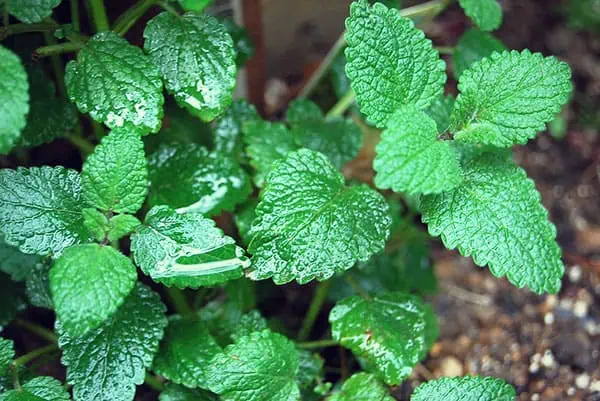
- Scientific name: Mentha spp.
- Native or not: Mixed
- USDA zones: 3–11
- Growth habit: Spreading herb
Mint is one of the most common plants people accidentally let take over their garden. It spreads through underground runners and can quickly fill an entire bed.
At first, it seems manageable, but it doesn’t take long before it starts popping up in nearby areas. Once established, it’s difficult to fully remove without digging out the root system.
It does have benefits, especially for cooking and teas, but most gardeners recommend growing mint in containers to keep it under control. We actually plant some for fun, just to see what it would do. It quickly spread and began invading the space of nearby flowers and plants. Watch out for this one!
12. Creeping Charlie

- Scientific name: Glechoma hederacea
- Native or not: Non-native (invasive)
- USDA zones: 3–10
- Growth habit: Low-growing ground cover
Creeping Charlie is a common lawn and garden invader that spreads quickly across the ground. It forms dense mats that can choke out grass and other plants.
It spreads through creeping stems that root at nodes, making it very effective at covering ground. This also makes it difficult to remove completely, since any remaining pieces can regrow.
While it can tolerate shade and poor soil, which gives it an advantage, that same resilience makes it frustrating for homeowners trying to control it.

WildlifeInformer.com is your #1 source for free information about all types of wildlife and exotic pets. We also share helpful tips and guides on a variety of topics related to animals and nature. Subscribe on YouTube for videos.