
Groundhogs can cause significant damage to your yard and property, especially when they establish a burrow close to your home. These large rodents are powerful diggers with strong claws and an appetite for garden plants. While a groundhog wandering through your yard might not seem like a serious problem, one that decides to move in can quickly become a nuisance.
The biggest problems come from their digging and feeding habits. Groundhogs can excavate extensive underground tunnels, disturb the soil beneath structures, and eat large amounts of vegetation. Some homeowners may not even realize they have a groundhog living on their property until the damage becomes noticeable.
Below are three main ways groundhogs can damage your yard and property, along with some additional concerns homeowners should know about.
3 main ways groundhogs can damage your yard and property
1. Damaging foundations and structures
One of the more serious concerns with groundhogs is their tendency to dig burrows beneath or near buildings. Groundhogs naturally seek out sheltered locations where they can establish underground dens, and the areas beneath sheds, decks, porches, and other structures can provide exactly what they’re looking for.
A groundhog burrow isn’t just a small hole in the ground. These animals can create tunnel systems that extend several feet below the surface and run for many feet horizontally. Burrows often contain multiple entrances, nesting chambers, and separate areas used for different purposes.
As a groundhog excavates its burrow, it removes soil that may have been helping support the surrounding ground. This becomes a potential problem when the tunnels run beneath structures or near their foundations.
House foundations
Groundhogs digging near shallow footings or foundation walls can disturb supporting soil. In certain situations, this may contribute to settling or worsen existing drainage and soil stability problems.
It’s important to understand that groundhogs generally aren’t chewing through concrete foundations or deliberately destroying buildings. The concern is the soil they remove while digging and how that excavation may affect nearby structures.
A burrow beside a house doesn’t automatically mean the foundation is in danger. However, repeated excavation near shallow footings, existing cracks, or poorly drained soil deserves attention.
Sheds and outbuildings
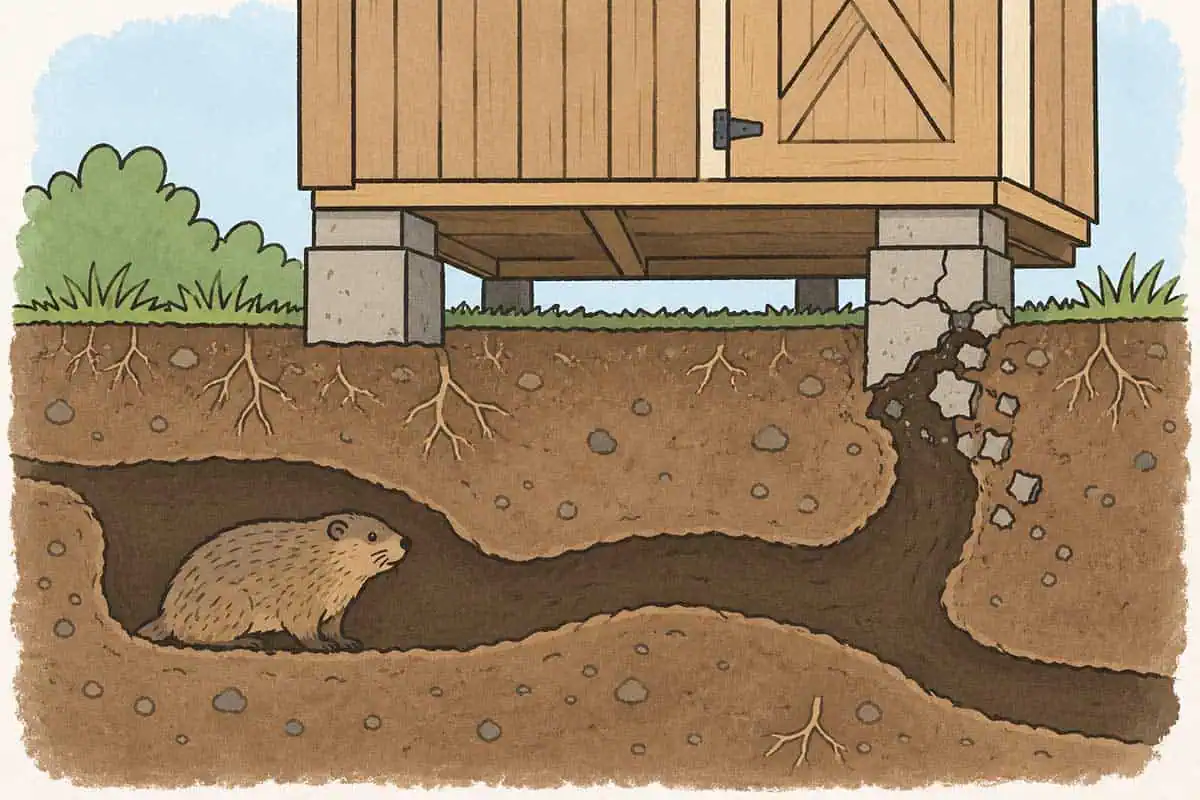
Sheds resting on concrete blocks, gravel pads, or shallow supports may be particularly vulnerable when groundhogs remove soil beneath them. Uneven settling can eventually cause doors to stick or floors to become unlevel.
The sheltered space beneath a shed is especially attractive to groundhogs because it provides protection from predators and weather. Once a groundhog establishes a burrow there, it may continue using and maintaining the tunnel system for an extended period.
If you’ve discovered one living beneath an outbuilding, check out this article on how to get rid of groundhogs under a shed.
Decks, porches, and patios
Burrowing near deck support posts and footings can disturb the surrounding soil. This is especially concerning when a structure already has shallow or poorly supported foundations.
Tunnels beneath patio pavers, concrete slabs, or steps may also contribute to sinking, shifting, or uneven surfaces if the supporting soil settles. Homeowners might notice gaps developing between pavers or sections of a walkway becoming uneven.
Signs of possible structural damage
Not every groundhog burrow causes structural damage. However, homeowners should investigate digging that occurs close to buildings, especially when changes in the surrounding ground become noticeable.
Some warning signs include:
- Large burrow openings beside foundations or underneath buildings.
- Fresh piles of dirt near sheds, decks, or porches.
- Soil that appears to be sinking around a structure.
- New gaps beneath steps, patios, or shallow foundations.
- Doors or gates that suddenly become difficult to open because a structure has shifted.
These signs don’t necessarily mean a groundhog is responsible for structural damage, but they warrant further investigation. If a burrow appears to be affecting a building’s support, a qualified professional should assess the situation.
2. Destroying vegetable gardens
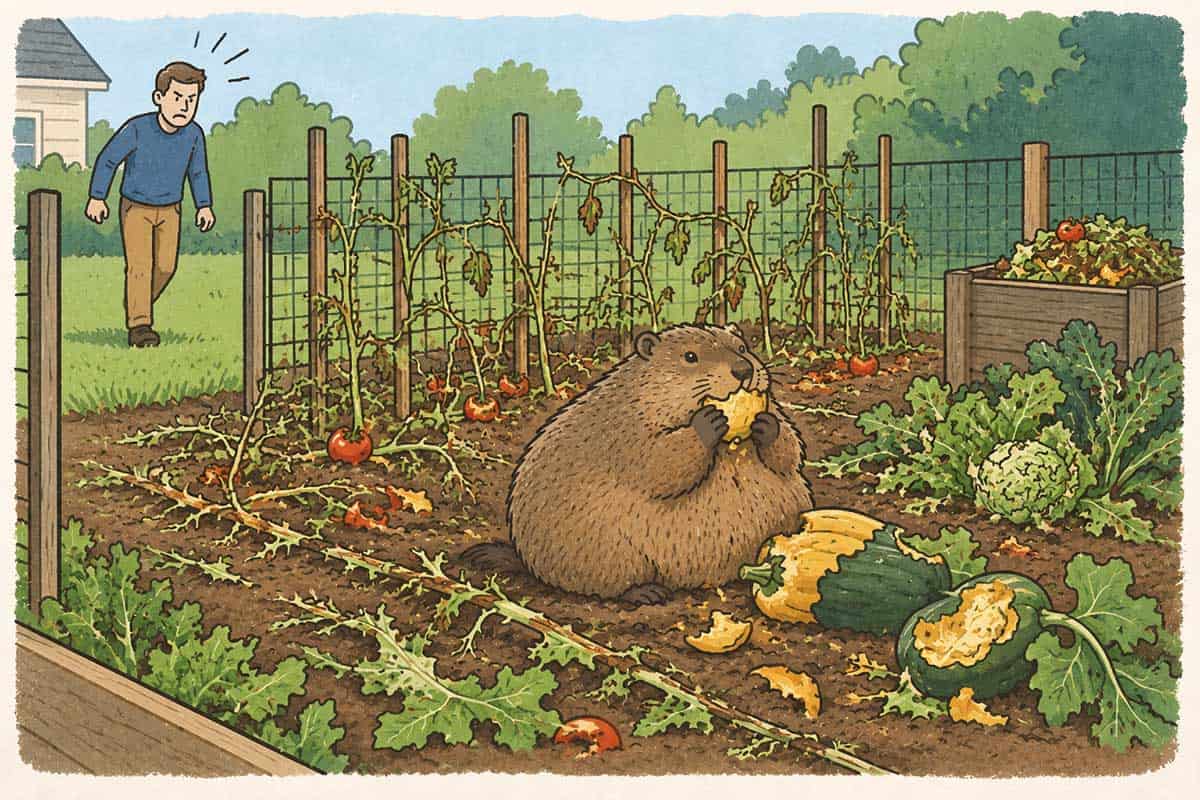
Groundhogs are herbivores that feed primarily on vegetation, making vegetable gardens especially attractive to them. While their natural diet includes grasses, clover, wildflowers, and other plants, they will readily eat many vegetables grown in home gardens.
Unlike animals that occasionally take a small bite out of a plant, groundhogs can consume substantial amounts of vegetation. They may eat leaves, stems, tender shoots, and entire young plants.
Vegetables groundhogs commonly eat
Groundhogs are not particularly picky when it comes to tender garden vegetation. Some vegetables they commonly feed on include:
- Lettuce and other leafy greens
- Beans and peas
- Broccoli
- Cabbage
- Carrots and carrot tops
- Squash and other tender garden plants
- Various young seedlings
Young vegetable plants are especially vulnerable. When a groundhog eats the growing portions of a small seedling, the plant may not recover. Even established plants can suffer reduced growth and production when substantial amounts of foliage are removed.
Why groundhogs keep returning to gardens
Groundhogs often establish burrows close to reliable food sources. If your vegetable garden is within easy traveling distance of an active burrow, the same animal may return repeatedly to feed.
A homeowner might notice a few damaged leaves one morning, only to discover that several plants have been heavily eaten a few days later.
Groundhogs also spend much of the warmer part of the year eating and building fat reserves in preparation for hibernation. Their need to accumulate body fat makes feeding an important part of their daily activity.
This can make late summer particularly frustrating for gardeners, especially when vegetables are approaching harvest.
Why ordinary garden fences may not work
Another problem is that groundhogs aren’t necessarily discouraged by ordinary garden fences. They’re capable of digging underneath barriers, and they can climb surprisingly well for such stocky animals.
A fence that successfully keeps rabbits out may not be enough to stop a determined groundhog. Effective groundhog exclusion generally requires fencing that addresses both digging and climbing.
Wire mesh buried beneath the ground or installed as an outward-facing underground apron can help discourage tunneling. A loose or outward-angled upper section can also make climbing more difficult.
According to the University of Maryland Extension’s groundhog guidance, a sturdy four-foot fence buried 12 inches into the ground can help protect vegetable gardens. Additional protection may be needed to prevent groundhogs from climbing over the barrier.
Signs groundhogs are eating your vegetables
Groundhog feeding damage can resemble damage caused by rabbits, deer, and other wildlife. However, there are several clues that may help identify the culprit.
- Large portions of leaves missing from plants.
- Young seedlings eaten close to the ground.
- Repeated damage to the same vegetable beds.
- Burrow entrances or worn paths near the garden.
- Groundhogs seen feeding during daylight hours.
Finding a groundhog burrow nearby or observing the animal feeding can help confirm which animal is responsible.
For gardeners who spend months preparing soil, planting seeds, watering, and maintaining vegetables, a groundhog can undo a considerable amount of work in a relatively short period.
3. Damaging lawns and landscaping
Even when groundhogs aren’t digging beneath structures or eating vegetables, they can still cause plenty of problems throughout a yard.
Groundhogs are among the larger burrowing rodents found in North America. Their burrows can have entrances roughly 10 to 12 inches across, and the tunnels may extend many feet underground.
Digging these tunnels requires moving a substantial amount of soil. Groundhogs push excavated dirt out of their burrows, often creating noticeable mounds near the entrances.
Leaving large holes and dirt piles in lawns
Groundhogs may choose to dig along fence lines, beneath shrubs, near woodpiles, or in other relatively undisturbed areas of a yard.
Large burrow entrances leave exposed dirt and openings in the lawn. Freshly excavated soil can cover and smother surrounding grass, leaving bare patches that may eventually need reseeding.
Some burrows have multiple entrances, meaning the damage isn’t necessarily limited to one spot. Groundhogs may also maintain and expand existing burrows, allowing the disturbed area to grow over time.
Even after a groundhog leaves, the openings and underground tunnels can remain unless they’re properly addressed. In fact, groundhogs sometimes abandon their burrows, leaving behind tunnel systems that other animals may eventually use.
Creating uneven ground and tripping hazards
The underground tunnels themselves can sometimes contribute to localized settling, especially when the soil above a tunnel becomes unstable.
This may leave uneven areas or shallow depressions in the lawn. The openings can also create hazards for people and pets.
Someone walking through tall grass could accidentally step into a hidden burrow entrance and twist an ankle. Dogs running through the yard may encounter similar hazards.
These risks are particularly concerning in yards where children play or where people regularly walk after dark.
Eating flowers and ornamental plants
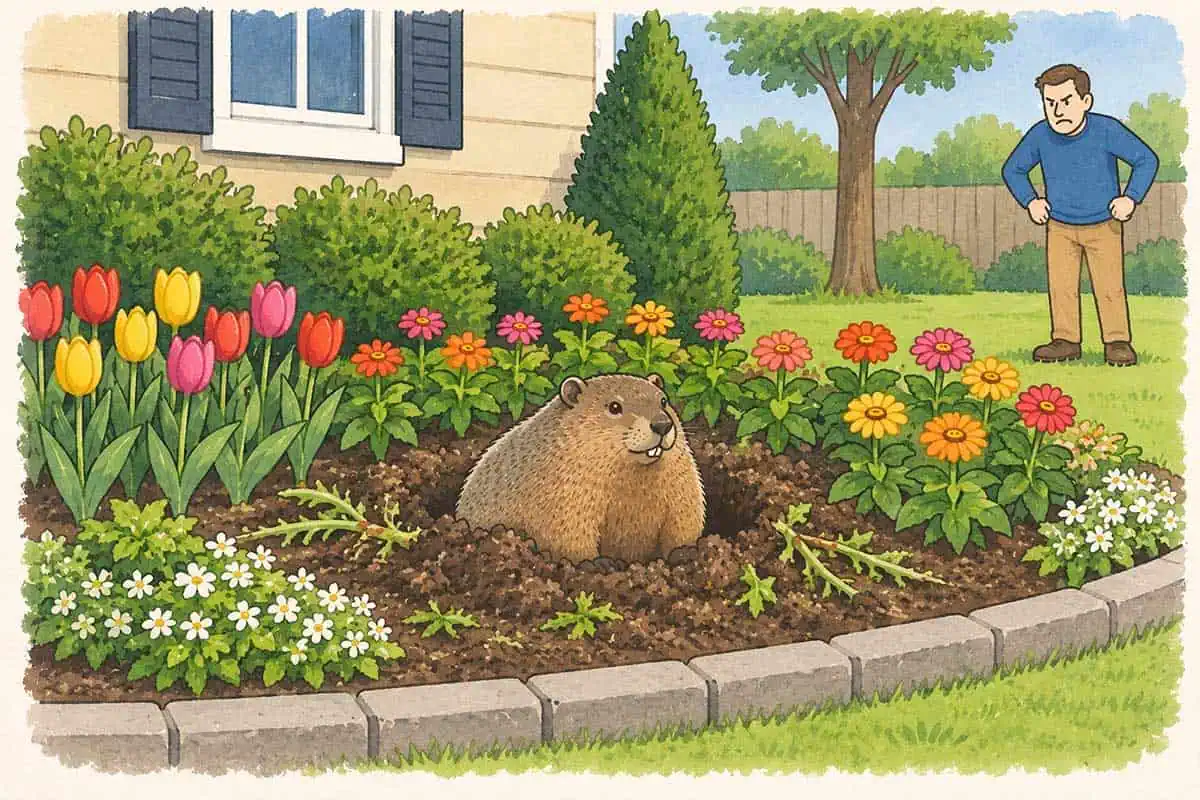
Vegetable gardens aren’t the only source of food for groundhogs. They also eat many flowering plants, tender shoots, and other ornamental vegetation.
Flower beds can be particularly appealing when they contain young plants with soft leaves and stems. Groundhogs may eat flowers, remove large portions of foliage, or clip plants close to the ground while feeding.
They can also damage newly planted landscaping before the plants have had time to become established.
Although groundhogs don’t eat every type of ornamental plant, homeowners may find that certain flowers or shrubs are repeatedly targeted. This can be frustrating when you’ve invested money and time into establishing flower beds or decorative landscaping.
Disturbing landscaping and contributing to erosion
Groundhogs sometimes establish burrows beneath decorative shrubs, along landscape borders, or near retaining walls.
Their digging can displace mulch, expose plant roots, and disturb carefully maintained planting beds. Burrowing close to retaining walls or on slopes can also create additional concerns.
On embankments, tunnels may contribute to localized soil instability or erosion, particularly where drainage is already a problem. Heavy rainfall can worsen existing soil movement around disturbed areas.
The extent of the damage depends on where the groundhog chooses to dig and how extensive its burrow becomes.
A single burrow near the edge of a large property may cause little concern. Several openings scattered through a landscaped yard, however, can become a persistent maintenance problem.
Potential health risks to people and pets
Beyond the physical damage they can cause, groundhogs may also present certain health concerns for homeowners and their pets.
It’s important to keep these risks in perspective. Most groundhogs avoid people, and simply having one living nearby doesn’t mean your family is in danger.
However, groundhogs are wild mammals and can carry diseases or parasites.
Rabies
Groundhogs are susceptible to rabies, a viral disease that affects the nervous system of mammals. Although rabies is not common in every groundhog population, infected groundhogs have been documented, particularly in regions where rabies circulates among wildlife.
The virus is generally transmitted through the bite of an infected animal.
A groundhog that appears unusually aggressive, disoriented, paralyzed, or unable to move normally should be avoided. These symptoms can have causes other than rabies, but they warrant caution.
Never attempt to handle a groundhog that appears sick or is behaving abnormally. Contact local animal control or a wildlife professional instead.
If a person is bitten or scratched by a groundhog, the wound should be washed thoroughly and medical advice sought promptly to assess rabies exposure and other infection risks.
Ticks and fleas
Like many wild mammals, groundhogs can host external parasites, including ticks and fleas.
Some tick species are capable of transmitting diseases to humans and pets. However, finding a groundhog in your yard doesn’t necessarily mean it is carrying infected ticks or increasing your family’s disease risk.
Ticks can also be introduced into yards by deer, mice, birds, and many other animals.
Maintaining vegetation, checking pets for ticks, and using veterinarian-recommended parasite prevention can help reduce exposure.
Other infections and parasites
Groundhogs can also harbor various internal parasites and may occasionally be associated with bacterial infections such as tularemia.
Human infection directly linked to groundhogs is uncommon, but handling sick or dead wildlife without appropriate protection can create unnecessary exposure risks.
Dogs may be especially curious about groundhog burrows and sometimes attempt to investigate or chase the animals. This can lead to bites or scratches if a groundhog feels cornered and attempts to defend itself.
The safest approach is to avoid direct contact, keep pets away from active burrows when possible, and allow wildlife professionals to handle situations involving sick or potentially dangerous animals.
For more information about these concerns, see our article explaining whether groundhogs are dangerous to people and pets.
How to tell if a groundhog is living on your property
Before assuming a groundhog is responsible for damage around your yard, it’s worth looking for evidence of an active burrow.
Groundhogs are primarily active during daylight hours, which makes them somewhat easier to observe than nocturnal animals such as raccoons and opossums.
They often feed in open grassy areas before retreating to their burrows when disturbed.
Common signs of groundhog activity
- Large holes: Burrow entrances frequently appear near sheds, fences, foundations, or dense vegetation.
- Freshly excavated soil: Dirt piles near burrow openings may indicate recent digging.
- Worn paths: Groundhogs may create recognizable trails through grass between their burrows and feeding areas.
- Damaged plants: Missing vegetables, clipped stems, and damaged ornamental plants may indicate feeding activity.
- Daytime sightings: Seeing a groundhog repeatedly appearing in the same area is a strong indication that it lives nearby.
Does a burrow mean a groundhog still lives there?
Not necessarily. Groundhog burrows may contain more than one entrance, including secondary openings that are less noticeable than the main entrance.
Groundhogs may also abandon burrows, and other wildlife can sometimes move into the empty tunnels.
Finding a large hole doesn’t automatically mean a groundhog currently occupies it. Fresh digging, repeated sightings, and other signs of recent activity provide better evidence.
What to do if a groundhog is damaging your property
The best approach depends on where the groundhog is living and the type of damage it’s causing.
A groundhog occasionally feeding in an open lawn may not require the same response as one digging beneath your home’s foundation.
Protect vegetable gardens and flower beds
If the primary problem is a vegetable garden, installing a properly designed exclusion fence may be enough to prevent further damage.
Groundhog-resistant fencing generally needs protection against digging underneath it. A buried wire barrier or outward-facing underground apron can help discourage tunneling.
Because groundhogs can also climb, the upper portion of the fence may need additional protection.
For ornamental landscaping, protecting vulnerable plants with wire cages or other physical barriers can reduce feeding damage.
Address burrows beneath buildings carefully
Problems involving burrows beneath buildings are more complicated.
Before blocking an entrance, it’s important to determine whether the burrow is occupied. Sealing animals inside can create additional problems, particularly during spring and early summer when young groundhogs may be present.
Simply filling an active burrow with dirt may not solve the problem either. Groundhogs can reopen blocked entrances or excavate new ones nearby.
If digging is occurring close to a foundation, retaining wall, or another important structure, professional assessment may be appropriate.
Know when to contact a professional
A wildlife control professional can help determine whether a groundhog is actively using a burrow and recommend appropriate exclusion or removal methods.
If a structure appears to be settling or its foundation may have been affected, a qualified structural professional should evaluate the damage separately.
The important thing is to address the actual source of the problem rather than repeatedly repairing the same damage.
Final thoughts
Groundhogs can damage your yard and property in three main ways: digging around foundations and structures, destroying vegetable gardens, and damaging lawns and landscaping.
While most groundhog activity doesn’t result in serious structural damage, burrowing in the wrong location can become an expensive problem. Their appetite for vegetables and ornamental plants can also make them particularly frustrating for homeowners who enjoy gardening.
Groundhogs generally prefer to avoid people, but their burrows and occasional potential health risks are additional reasons to be cautious when one establishes a home close to yours.
Recognizing the signs of groundhog activity early gives you a better chance of protecting your property before minor damage becomes a larger problem. If you’d like to learn more about their behavior and digging habits, check out these facts about groundhogs.

WildlifeInformer.com is your #1 source for free information about all types of wildlife and exotic pets. We also share helpful tips and guides on a variety of topics related to animals and nature. Subscribe on YouTube for videos.